
When selecting an ACM panel, most people focus on color, finish, or cost. Thickness often becomes an afterthought. But that’s exactly where many projects go wrong. The thickness of a panel directly influences its strength, flatness, fabrication, durability, and long-term performance. A panel that works perfectly for indoor branding may not survive years of exposure on a high-rise façade.
Let’s be honest. Choosing the thickest option isn’t always the smartest decision either. Every project has different structural demands, environmental conditions, and budget limitations. Finding the right balance is what delivers lasting value.
Before comparing 3mm, 4mm, and 6mm options, let’s understand what panel thickness actually refers to. It’s not just one number. The overall thickness includes the aluminum skins bonded to the core, while skin thickness and core composition also contribute significantly to performance. Every layer plays a role in how the finished product behaves.
What Does ACM Panel Thickness Actually Mean?
The thickness of an ACM panel refers to the total panel dimension, including both aluminum skins and the core. Most architectural products are manufactured using two aluminum sheets permanently bonded to a mineral-filled or polyethylene core, creating a lightweight yet rigid aluminum composite material.
Three measurements deserve attention:
- Overall panel thickness, such as 3mm, 4mm, or 6mm
- Aluminum skin thickness, commonly ranging from 0.21mm to 0.50mm for architectural applications
- Core thickness, which may be polyethylene or fire-retardant mineral-filled depending on project requirements
Many people assume two panels with the same overall thickness perform identically. They don’t. A thicker aluminum skin generally offers better rigidity, dent resistance, and improved fabrication quality compared to thinner skins.
Standard Thickness Options and Where They Work Best
The most widely used ACM panel thicknesses are 3mm, 4mm, and 6mm. Each one serves a different purpose.
3mm Panels
A 3mm ACM sheet is primarily selected for interior applications, retail branding, display systems, signboards, exhibition booths, and lightweight architectural features. It is easy to fabricate and economical, making it suitable where structural loads remain relatively low.
4mm Panels
The 4mm ACM sheet has become the preferred choice for commercial façades, corporate buildings, hospitals, educational institutions, and residential elevations. It delivers an ideal combination of rigidity, manageable weight, and fabrication flexibility, making it the industry standard across many architectural projects.
6mm Panels
A 6mm aluminum composite material panel is typically specified for projects requiring higher stiffness, wider unsupported spans, premium façades, or areas exposed to demanding wind loads. Although heavier and more expensive, it offers enhanced structural stability in specialized applications.
Also Read : ACM vs Honeycomb Panels: A Complete Comparison Guide
Comparing 3mm vs 4mm vs 6mm
Understanding performance differences helps eliminate guesswork during specification.
| Feature | 3mm | 4mm | 6mm |
| Weight | Lightest | Moderate | Heaviest |
| Rigidity | Moderate | High | Very High |
| Flexibility | Highest | Balanced | Lowest |
| Cost | Lowest | Moderate | Highest |
| Typical Use | Signage & Interiors | Architectural Façades | High-load Applications |
A thinner ACM sheet bends more easily during fabrication but also becomes more susceptible to visible waviness if not properly supported. Conversely, thicker panels maintain flatter surfaces over larger spans, reducing the risk of oil canning and improving overall appearance.
How Thickness Affects Real-World Performance
Performance isn’t determined by appearance alone. Thickness influences how an ACM panel behaves throughout its service life.
Higher panel thickness generally improves resistance against wind-induced deflection, accidental impacts, and surface deformation. It also contributes to better dimensional stability, particularly on large elevations where flatness is visually critical.
Oil canning remains one of the most common aesthetic concerns in façade design. While fabrication quality, fixing methods, and installation practices influence this phenomenon, selecting the appropriate aluminum composite material thickness significantly reduces the likelihood of visible surface distortion.
Weather resistance itself depends more on coating systems and material quality than thickness. However, a structurally appropriate panel performs better under continuous thermal expansion and contraction cycles.
Selecting the Right Thickness Based on Application
Every application demands a different balance between strength, weight, and economy.
For indoor environments, branding elements, partitions, and decorative wall cladding, a 3mm ACM sheet usually provides adequate performance while keeping project costs under control.
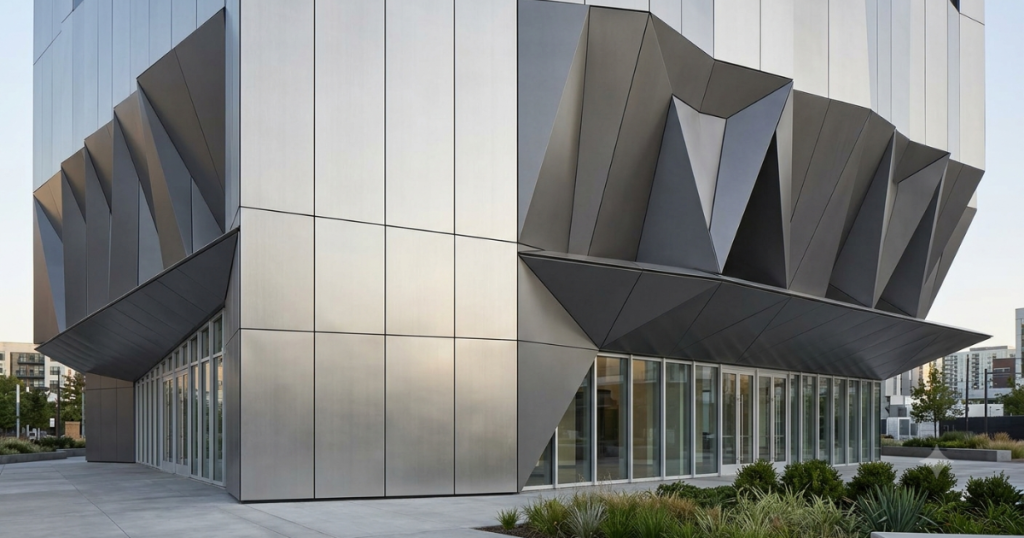
Commercial building façades, canopies, soffits, and architectural elevations generally benefit from a 4mm ACM panel. It offers reliable rigidity without introducing unnecessary weight, making it suitable for a broad range of exterior projects.
Where projects involve wider panel spans, stronger wind pressures, transportation hubs, institutional buildings, or premium architectural statements, designers may specify thicker aluminum composite material solutions for improved structural confidence.
Balancing Cost with Performance
Saving money during material selection can become expensive later. A thinner panel may reduce initial procurement costs but require additional sub-framing, closer fixing intervals, or future maintenance if used beyond its intended application.
On the other hand, specifying thicker panels where they’re not structurally necessary may increase project costs without delivering measurable benefits.
The objective should never be choosing the cheapest or thickest option. It should be selecting the ACM panel that matches the actual engineering requirements.
Also Read : How Aluminum Composite Panels Contribute to Sustainable Building Practices
Fabrication and Installation Considerations
Thickness also affects how panels are fabricated and installed.
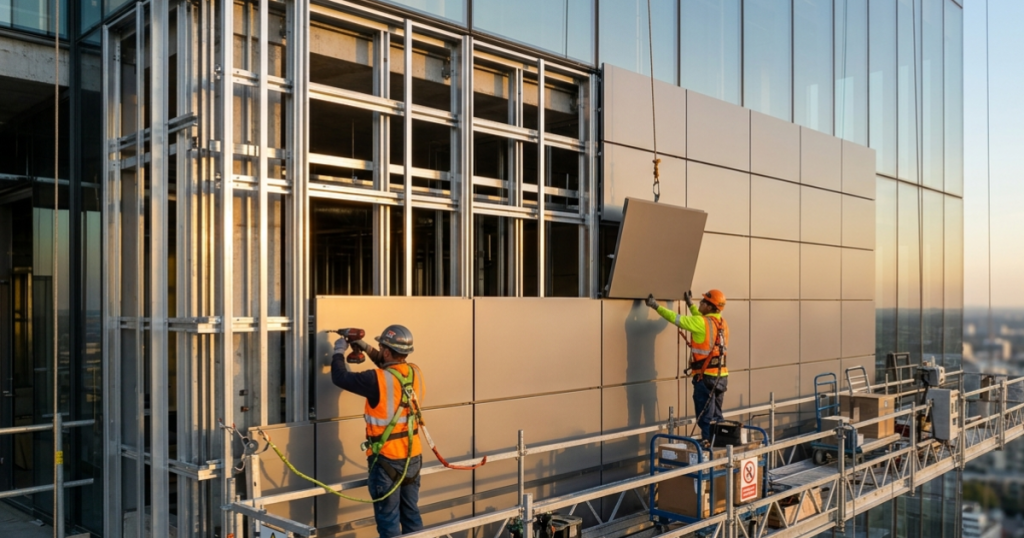
Routing depth, folding accuracy, cassette fabrication, and bending radii all vary depending on panel thickness. Installers must also account for thermal movement by maintaining proper expansion joints and compatible fixing systems.
An appropriately selected ACM sheet not only simplifies fabrication but also produces cleaner joints, better alignment, and improved long-term appearance.
Common Mistakes When Choosing Thickness
One of the biggest mistakes is selecting panels based solely on price. Lower initial costs can lead to higher lifecycle expenses if the panel lacks adequate rigidity.
Another common oversight is ignoring project location. Coastal regions, high-rise structures, and areas with higher wind exposure often require stronger panel specifications than sheltered interior environments.
Finally, many buyers compare only overall thickness while overlooking aluminum skin thickness and core composition. Both significantly influence the overall performance of aluminum composite material products.
How We Help Customers Choose the Right Thickness
At Aludecor, we believe selecting the right ACM sheet begins with understanding the project, not simply choosing a number. We evaluate application type, building height, structural requirements, environmental exposure, and fabrication methods before recommending a suitable specification.
Our product portfolio includes premium aluminum composite material solutions with high-quality aluminum skins, advanced coating technologies, and fire-retardant options that comply with demanding architectural expectations. This allows us to support projects ranging from interior branding to iconic commercial façades with confidence.
Standards and Recommendations for US Projects
For projects in the United States, panel selection should align with applicable building codes and project-specific engineering requirements. Architects commonly refer to the International Building Code (IBC), wind load calculations based on ASCE 7, fire performance requirements where applicable, and manufacturer installation guidelines.
For exterior wall assemblies, fire safety requirements, including compliance with NFPA 285 where mandated, should always be evaluated alongside thickness selection. Thickness alone cannot determine overall system performance.
The Final Verdict: 3mm, 4mm, or 6mm?
The ideal ACM panel thickness depends on where and how it will be used. While 3mm panels serve lightweight applications well, 4mm panels remain the preferred choice for most architectural façades because they offer an excellent balance between strength, weight, fabrication, and cost. Meanwhile, 6mm panels provide additional rigidity for specialized projects with greater structural demands.
When thickness is selected alongside the right aluminum skin, core composition, installation system, and environmental considerations, the result is a façade that performs beautifully for years.
Call us at: +1713-341-7509 or visit https://aludecor.us/contact-us/ for more information.
FAQs
What is the standard thickness of an ACM panel?
The most common architectural thicknesses are 3mm, 4mm, and 6mm. Among these, 4mm is widely regarded as the standard for exterior façades because it provides an excellent balance of structural rigidity, fabrication ease, weight, and cost. The final specification should always match the project’s structural and environmental requirements.
Is 3mm ACM panel suitable for exterior use?
A 3mm panel can be used for certain exterior applications such as signage and small architectural features where structural loads are limited. However, for most building façades, architects generally prefer thicker panels that provide better flatness, rigidity, and resistance to wind-induced deflection.
Why is 4mm ACM panel commonly used for façades?
A 4mm panel offers an effective balance between performance and economy. It delivers sufficient rigidity for most commercial façades while remaining lightweight enough for efficient fabrication and installation. This combination makes it the preferred specification across a wide variety of architectural projects.
How do I choose between 3mm, 4mm, and 6mm ACM panels?
The right choice depends on application, structural requirements, building height, environmental conditions, and project budget. Interior decorative installations often perform well with 3mm panels, while most commercial façades benefit from 4mm panels. Projects involving higher wind loads, wider unsupported spans, or premium structural demands may justify selecting a 6mm panel after consulting the project engineer and manufacturer.