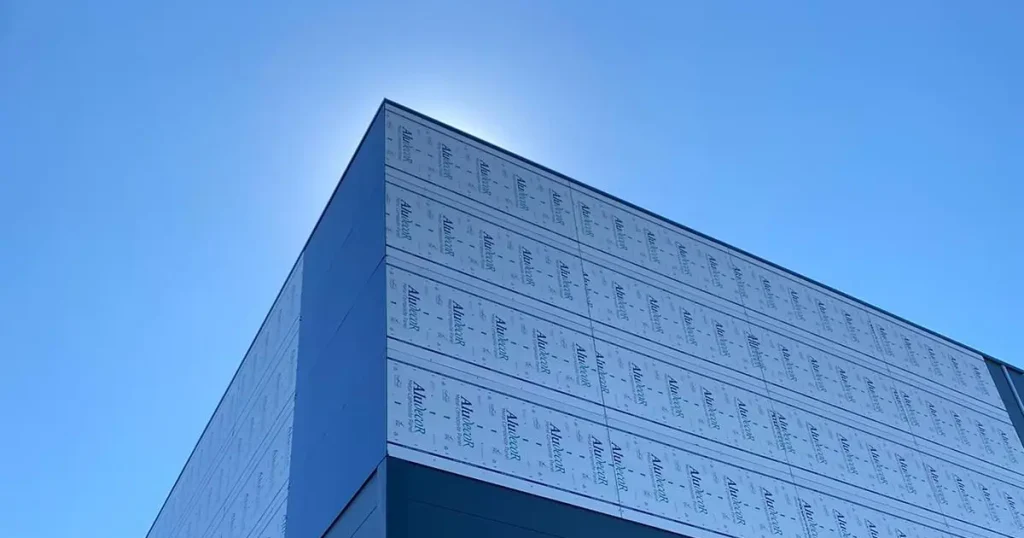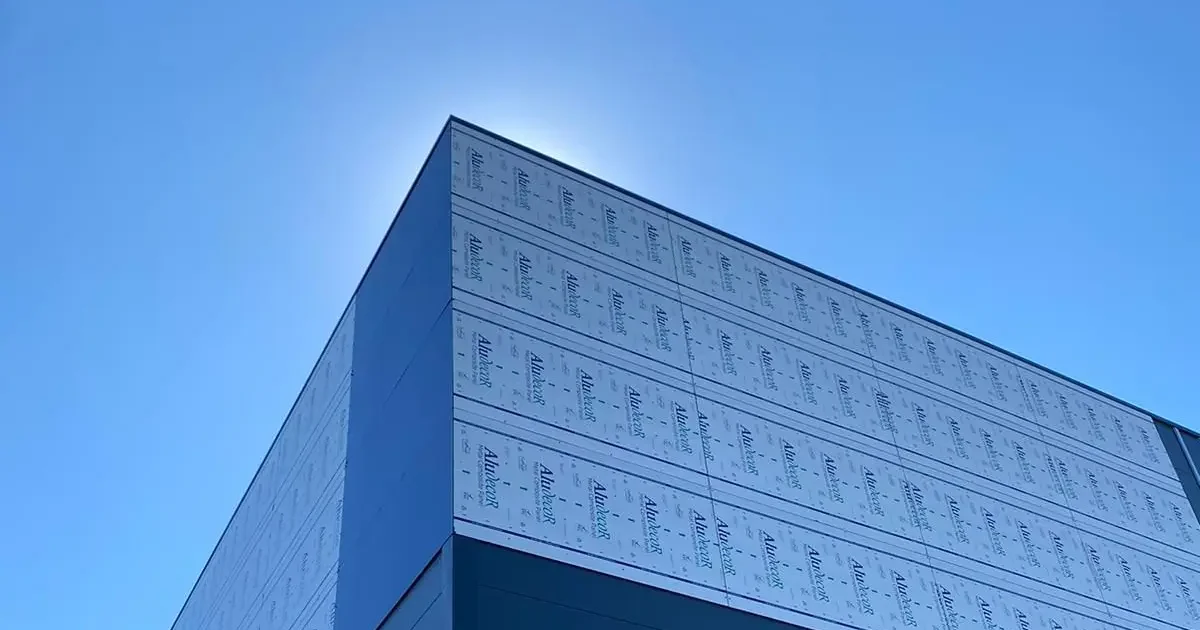
If you’re a specifier, a contractor, or a fabricator working on façades, interiors, or signage, you’ve probably seen both aluminum composite material (ACM) and aluminum honeycomb panels (AHP) listed in product catalogues. But the difference is not always obvious at first glance. Both look like clean metal panels, both are lightweight, and both are marketed as “high-performance” cladding.
But behind the similar appearance, the two materials are built very differently. Picking the wrong one for a project can mean unnecessary cost, over‑engineered support, or even under‑performance when it really matters. So, let’s clear the confusion once and for all.
What Are Aluminum Composite Panels and Aluminum Honeycomb Panels?
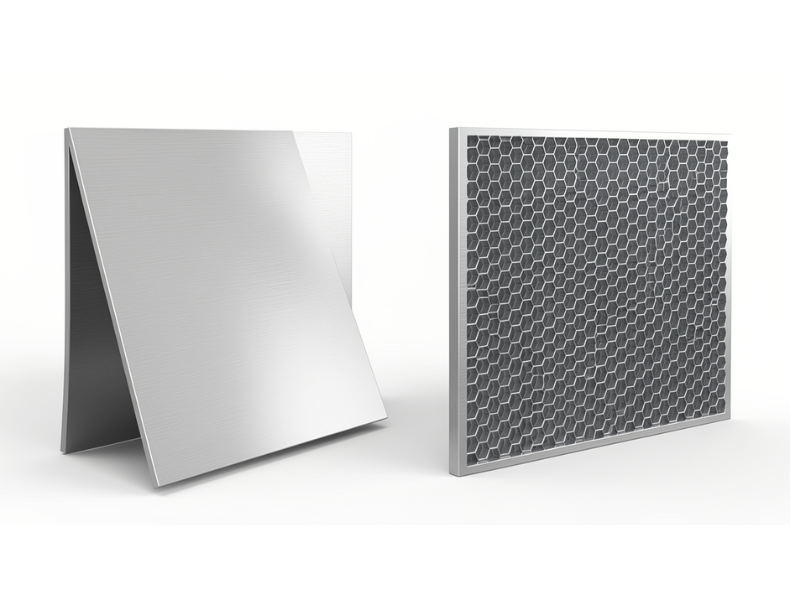
Aluminum composite panels are what many people still think of as ACM panels or Aluminum Composite Materials. They consist of two thin aluminum skins bonded to a core that’s typically polymer‑based or mineral‑filled. The core is usually flat and continuous, giving the panel its rigidity while keeping it lightweight.
Aluminium honeycomb panels, on the other hand, use a cellular honeycomb core, sandwiched between aluminium skins. That honeycomb core is literally made of thin aluminum or other material arranged in a hexagonal grid, which gives it exceptional stiffness with very little added weight.
At Aludecor, we make both ACM panels and AHP, but we also see projects where they’re used interchangeably or just for “looks”, which is where things can quietly go wrong. Understanding the core difference is the first step to making the right call.
Core Differences Between Aluminum Composite Panels and Aluminum Honeycomb Panels
Composition
ACMs use a sandwich of two aluminum sheets bonded to a continuous core. The core can be polyethylene for standard use or mineral‑filled for fire‑retardant or fire-resistant applications.
AHP swap the flat core for a honeycomb core, a geometric grid of thin walls, usually aluminum or sometimes other materials. That cellular structure creates a lot of internal stiffness while adding minimal mass.
Strength and stiffness
Aluminum honeycomb panels generally outperform Aluminum Composite Materials in terms of rigidity and surface flatness, offering a superior strength-to-weight ratio. The honeycomb core is engineered to resist buckling and distribute loads across the face sheets, which is why it’s often used in high‑stress architectural components and transport‑style applications.
ACM, while rigid enough for typical façade and signage work, relies more on the aluminum skin thickness and the quality of the bonding between the skins and the core. Their strength is more about flexibility and impact resistance, which makes them well-suited for non‑load-bearing cladding, decorative façades, and signage applications, rather than primary structural or load-bearing elements.
Weight
Both systems are lightweight compared with solid metal (≈8.2 kg/m²), but in many configurations, AHP (~5.2 kg/m²) can be significantly lighter than ACM (~8.1 kg/m²) for the same level of stiffness. That’s because the honeycomb core uses space strategically to maintain stiffness without adding mass.
For standard ACM, the weight depends on thickness and core type. Thicker panels with mineral‑filled cores will be heavier, but still significantly lighter than, say, solid sheet metal.
Flexibility and fabrication
Aluminum composite panels are very forgiving to fabricate. They can be cut, bent, and routed with standard shop tools, making them ideal for complex façade profiles, 3D letters, and perforated panels. That’s one reason we see them used so heavily in signage and feature walls.
AHP requires more careful handling. The honeycomb core can be damaged if you drill or cut through it the wrong way, or apply pressure that collapses the cells locally. But once you’re set up for it, they machine beautifully and hold very precise tolerances.
Cost
AHP generally carries a higher price tag than ACMs of similar dimensions, mainly because of the complexity of the honeycomb core manufacturing and the tighter tolerances involved.
ACMs are more cost‑efficient for large‑surface cladding, big signage, and standard façade work, where extreme stiffness isn’t the main driver and the budget matters more.
Also Read : How Aluminum Composite Panels Contribute to Sustainable Building Practices
Performance Differences: Structural vs Non‑Structural Uses
Here’s where things really diverge.
AHPs are often used in roles that border on semi‑structural or high‑performance. The honeycomb core is designed to resist significant bending, shear, and point loads. That’s why you tend to see them in things like:
- Large‑span architectural canopies
- High‑rise curtain‑wall spandrels needing extra rigidity
- Industrial or transport‑style applications where weight savings and stiffness are critical
ACM, in contrast, is best treated as composite panels for cladding, decoration, and protection, not as load‑bearing skins. They’re excellent for façades, feature walls, partitions, and signage, where the substructure carries the load, and the panel just provides the finish.
That’s why Aludecor keeps a clear distinction between the ACM line and AHP options. It’s not just about looks; it’s about how the panel behaves under wind, differential movement, and thermal expansion.
When to Choose Aluminum Composite Panels vs Aluminum Honeycomb Panels
Here’s a simple, fact‑based way to think about it.
Choose aluminum composite panels when:
- The job is mainly about aesthetic cladding, façades, or signage.
- You need easy fabrication, moderate bending, and routing for complex shapes.
- Budget is a key consideration, and you don’t need extreme stiffness.
- The substrate and substructure are already designed to handle structural loads.
Choose AHP when:
- You’re dealing with very large spans or cantilevered elements.
- You need maximum stiffness with minimal added weight.
- The project is in an industrial, high-stress, or transport‑adjacent environment.
- The honeycomb core value justifies the extra cost because of the performance benefit.
We at Aludecor have seen projects where a small, high‑stress detail was upgraded from composite panels to AHP simply because wind‑load simulations showed better deflection control. Conversely, we’ve also seen big‑box façades where ACP did the job at a fraction of the cost.
Installer‑Focused Considerations
For the crew on site, the difference shows up in handling, fixings, and detailing.
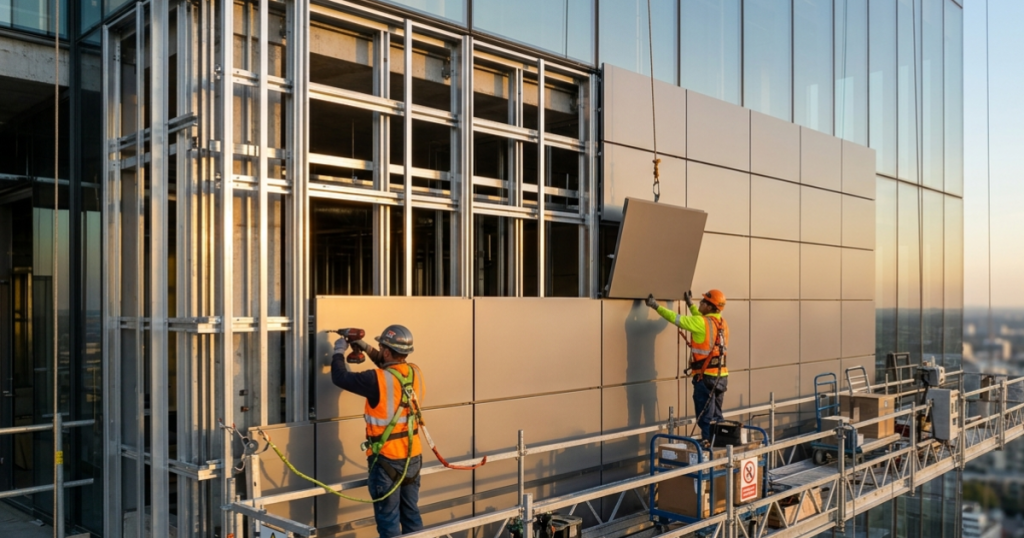
ACMs are easier to handle. They’re flexible enough for field adjustments, and you can work with them using standard tools. We design many of our ACPs for straightforward clip‑on or cassette‑based mounting systems that reduce on‑site complexity.
Aluminum honeycomb panels demand a bit more planning. The honeycomb core is sensitive to improper edge cutting, over‑drilling, or point‑load pressure. But once the fabrication setup is right, they’re very stable and precise. Installers who work with them often comment on how straight and flat they stay over large spans.
From a fabrication standpoint, Aludecor, besides offering fixing systems, provides guides for cutting, routing, and drilling for both aluminium honeycomb panels and ACMs. We maintain these instructions because, in practice, we’ve seen panels damaged when installers treat a honeycomb core as if it were a solid core during drilling or edge‑cutting.
Also Read : Composite Fences vs. Traditional Fencing: Why Composite Material Wins
Real‑World US Use Cases
Let’s look at how these two types of composite panels are actually used.
On a mixed‑use high‑rise in a coastal city, the main façade cladding might be ACM in a fire‑retardant configuration, chosen for its balance of weight, fire‑performance, and colour‑retention. The big canopy over the entrance, spanning 10–12 m, might switch to aluminum honeycomb panels to minimise deflection while still keeping the canopy light and easy to lift.
In a big retail mall, ACP could cover most of the parapet and storefronts, while the interior feature wall extending from floor‑to‑ceiling in a waiting area uses aluminum honeycomb panels for rigidity and a clean, flat finish.
ACMs are used for large‑scale printed signage and feature walls where the budget is tight, and aluminum honeycomb panels are brought in for very large, cantilevered display elements that couldn’t afford to sag.
Decision Framework: Quick Comparison Table
Here’s a high‑level fact‑based comparison that reflects Aludecor’s product logic.
| Parameter | Aluminum composite panels | Aluminum honeycomb panels |
| Core type | Solid polymer or mineral‑filled core | Honeycomb core (Nexcore), an aluminium‑based grid structure. |
| Typical use | Façade cladding, signage, interior finishes | High‑span canopies, high-rises, and high‑stiffness façade elements |
| Weight per m² | Lower to moderate, depending on thickness and core | Often lighter for the same stiffness |
| Fabrication ease | High; easy to cut, bend, and rout with standard tools | Requires more care, especially when edge‑drilling and routing near the core |
| Cost | Generally lower for large area applications | Generally higher due to the complex honeycomb-core manufacturing |
| Structural role | Non‑structural cladding/finish panel | Semi‑structural or high‑performance skin, suitable for load-bearing façade elements. |
| Fire Performance | Typically Class B, with higher-performance formulations achieving Class A (ASTM E84) | Non-combustible by design, typically achieving Class A (ASTM E84) performance. |
Call us at: +1713-341-7509 or visit https://aludecor.us/contact-us/ for more information.
FAQs
- Which panel is better for large spans or cantilevered elements?
Aluminum honeycomb panels are better suited for large spans and cantilevered applications due to their higher stiffness and lower deflection under load.
- When is ACM the more practical choice?
ACP is ideal for standard façade cladding, signage, and interior applications where ease of fabrication, cost efficiency, and design flexibility are key.
- Do both panels require similar support systems?
No. Honeycomb panels typically require less frequent support due to higher rigidity, while ACM systems may need closer substructure spacing depending on span and wind load.
- How do the two compare in terms of installation?
ACM is easier to fabricate and adjust on site, whereas honeycomb panels require more precise fabrication and handling but offer better dimensional stability once installed.
- Are both panels suitable for exterior façades?
Yes. Both are widely used in exterior applications, but the choice depends on performance requirements such as span, flatness, and structural demands.
- Which option is more cost-effective overall?
ACM is generally more cost-effective for large surface areas, while honeycomb panels may justify their higher cost in applications requiring enhanced stiffness and reduced deflection.
- How should one decide between ACM and honeycomb panels?
The decision should be based on performance requirements, span conditions, fabrication needs, and budget, rather than appearance alone.