
If you have ever walked past a sharp-looking storefront sign, a clean commercial façade, or a corporate reception wall and wondered how it stays so flat without looking bulky, there is a good chance you have encountered aluminum composite material.
In simple terms, aluminum composite material is a layered panel made by bonding aluminum skins to a core. The combination is the point. You get the surface qualities of aluminum without having to use a thick, solid aluminum sheet for every application.
ACM has become relevant across signage, architectural cladding, interior finishes, and branded environments because it brings together low weight, dimensional stability, workable fabrication, and a broad visual palette. But it is not a one-size-fits-all material. Core type, skin thickness, coating, fixing method, panel construction, and local code requirements all matter.
So, for a specifier or installer, the useful question is not simply “Is ACM good?” It is “Which ACM construction is appropriate for this application?”
What does aluminum composite material mean?
The term aluminum composite material describes a panel in which two aluminum face sheets are bonded to a central core. The core can vary significantly depending on the intended application. Some panels use polymeric cores, while others use mineral-filled or other fire-performance-oriented constructions. That distinction is especially important for building applications.
The word “composite” is doing quite a bit of work here. Instead of asking a single sheet of aluminum to provide every property, the panel combines materials so each layer contributes something useful.
The outer aluminum skins provide the visible surface and much of the panel’s bending behavior. The core maintains separation between those skins and contributes to the panel’s overall rigidity, weight, and other performance characteristics. Coatings then protect and decorate the exposed surface.
How is aluminum composite material manufactured?
Although the exact manufacturing route varies by product, the basic construction is relatively straightforward.
First come the aluminum coils. The alloy and temper are selected according to the performance requirements of the finished panel. The aluminum may receive a coating system before or as part of the panel manufacturing process, depending on the product construction.
Then comes the core. In a continuous lamination process, the core material is brought between the aluminum sheets and bonded under controlled conditions. The result is a flat, continuous composite panel that can later be cut to size or fabricated into specific forms. Continuous lamination is also used for established architectural composite panel products.
That sounds simple. It isn’t.
Bond integrity, surface preparation, coating quality, core consistency, temperature control, and process tolerances can all affect the finished panel. A panel can look immaculate on a sample board and still perform poorly if manufacturing quality or fabrication practices are inconsistent.
For specifiers, this is the useful part: do not stop at the product name. Read the construction.
The anatomy of an ACM panel
A typical ACM panel can be understood in four functional layers.
Aluminum face sheets
These form the outer surfaces. Their alloy, temper, and thickness influence strength, fabrication behavior, appearance, and overall panel performance.
Core
The core sits between the skins. Its composition can vary dramatically. A polymeric core may be selected for certain signage or architectural applications, while mineral-filled cores are available where higher fire performance is required.
Bonding interface
The adhesive or bonding interface is what turns three separate components into one working panel. Peel strength and bond integrity therefore matter, particularly when the panel is routed, folded, fabricated, or exposed to changing environmental conditions.
Surface coating
The coating provides color and finish while helping the aluminum surface resist environmental exposure. Depending on the product, coating systems may include PVDF-based or other architectural-grade finishes.
This layered construction is why two panels that look almost identical can behave differently in fabrication and service.
Key properties that make aluminum composite material useful
Lightweight construction
One of ACM’s most practical advantages is its relatively low weight for the rigidity it can deliver. This makes handling easier for installers and can reduce the demands placed on supporting structures.
Durability and dimensional behavior
An exterior panel has to handle more than rain. Sunlight, heat, humidity, dust, pollutants, temperature changes, and everyday impact can all affect its long-term performance.
Aluminum offers good corrosion resistance, while the coating helps protect the surface and retain its color and finish. For exterior applications, check properties such as coating adhesion, abrasion resistance, chemical resistance, and weathering performance.
Thermal movement matters too. Aluminum expands and contracts with temperature changes, so proper joints, fixings, and subframe detailing are essential, particularly across larger façades.
Laboratory tests provide useful performance indicators, but actual service life also depends on climate, exposure, installation quality, and maintenance.
Weather resistance
For exterior use, the coating deserves almost as much attention as the core. A visually attractive panel that loses gloss, chalks excessively, or develops poor adhesion is not doing its job.
AAMA 2605 is associated with high-performance organic coatings for architectural applications. Still, compliance with a coating standard should be considered alongside the complete panel specification and project requirements.
Finish and design flexibility
This is where ACM gets interesting.
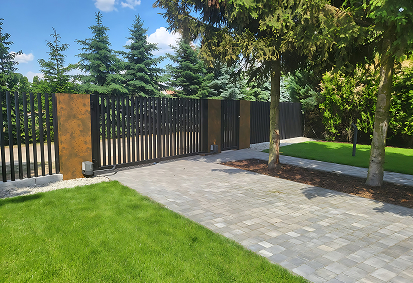
The material can be supplied in different colors, gloss levels, textures, metallic effects, stone-inspired appearances, wood-inspired appearances, and custom visual treatments, depending on the manufacturer and product range. Panels can also be routed, folded, cut, drilled, and fabricated into shapes suited to the design.
For signage, the flat surface can be particularly useful for printed graphics and branding. For façades, the same basic material can become a much larger visual envelope.
Where is ACM used in the US?
ACM has a broad application range, but three categories are particularly familiar: signage, exterior architectural cladding, and interiors.
Signage and visual communication
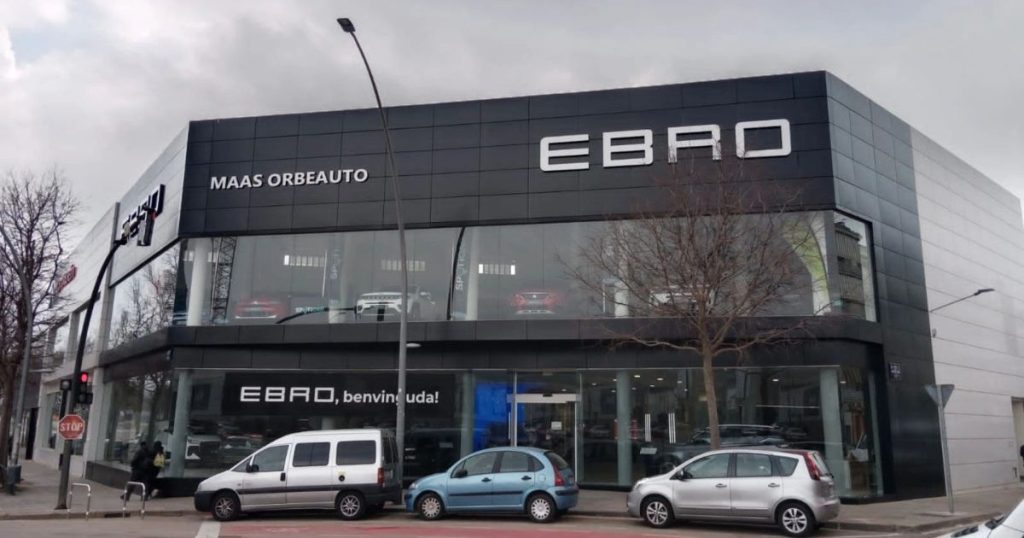
ACM is widely used for signboards, wayfinding panels, retail graphics, corporate identity elements, and other branded installations. The flat surface, low weight, and ease of fabrication make it practical for sign makers.
It can also be routed and folded to create returns, trays, letters, and other fabricated sign components. The exact printing and fabrication system should, of course, be checked against the panel manufacturer’s recommendations.
Exterior façade cladding
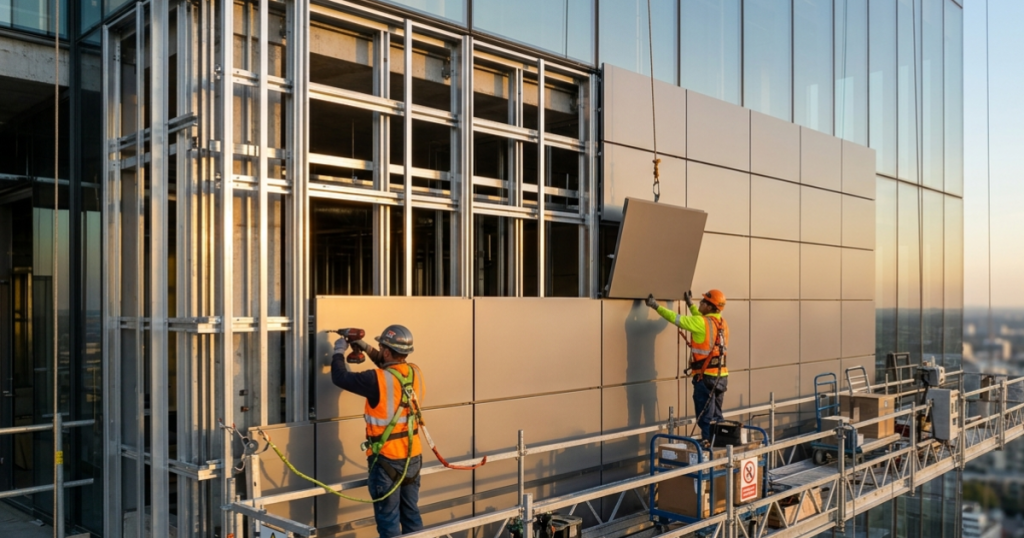
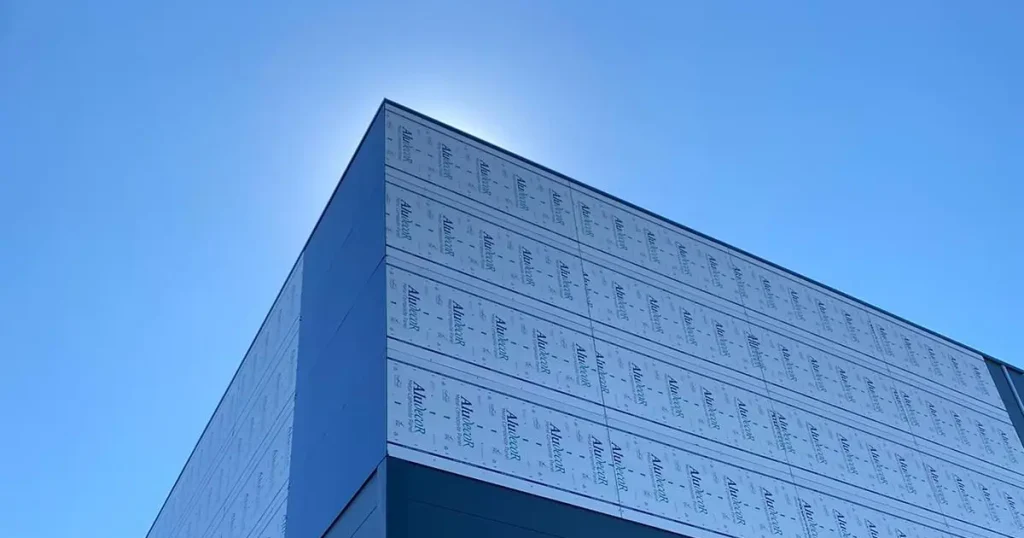
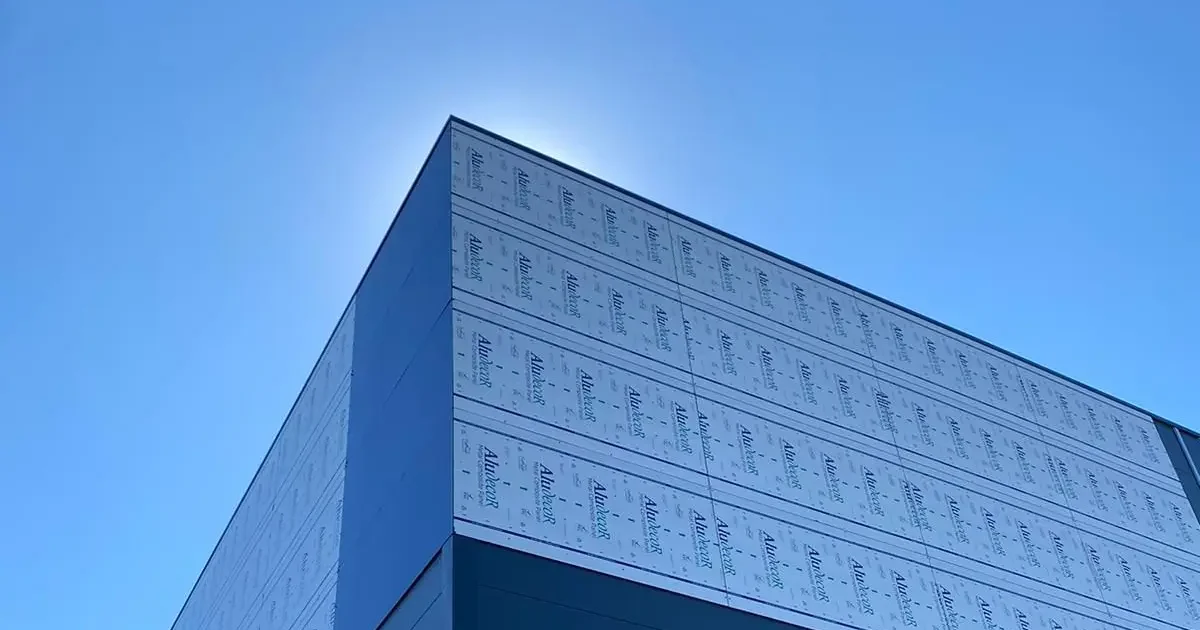
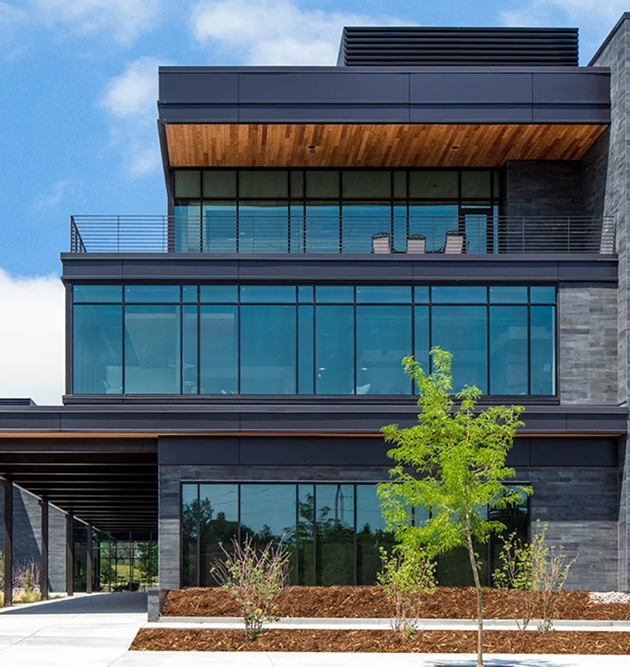
For building exteriors, ACM can be used as part of rainscreen and curtain wall-type façade assemblies, subject to the applicable system design and code requirements. Architectural composite panels are used in ventilated façade systems, where the cladding forms part of a larger wall assembly rather than functioning as the entire wall on its own.
This is where material selection becomes more serious. Fire performance cannot be treated as an afterthought. A façade panel with a polymeric core is not interchangeable with a mineral-filled fire-retardant or non-combustible panel simply because the dimensions and finish look similar.
The 2024 International Building Code, for example, specifically addresses exterior walls containing metal composite material systems and includes provisions concerning vertical and lateral flame propagation and NFPA 285 where applicable.
The panel alone does not determine the performance of an entire wall assembly.
Interior applications
Inside buildings, ACM can be used for wall panels, columns, feature walls, partitions, ceiling elements, retail interiors, elevator surrounds, and branded spaces, depending on the product and fire requirements.
Interior applications can sometimes be more forgiving from a weathering perspective, but that does not mean specification becomes casual. Cleaning chemicals, abrasion, impact, fire performance, and installation details still need consideration.
Aluminum Composite Material vs. Solid Aluminum
One common comparison is ACM versus solid aluminum sheet.
Solid aluminum is exactly what it sounds like: a single, continuous aluminum sheet. ACM uses a composite construction with aluminum skins separated by a core.
The difference becomes especially interesting when bending stiffness and weight are considered. The separated skins in a sandwich-style construction can provide useful structural efficiency without requiring the same amount of aluminum throughout the entire thickness.
That can translate into easier handling and fabrication. But solid aluminum remains useful where its specific material properties, thickness, durability, forming behavior, or project requirements make it the appropriate choice.
There is no universal winner here. The correct material depends on the application.
Aluminum Composite Material vs. Wood
Wood has warmth and a tactile quality that aluminum cannot quite imitate. It is also a natural material with its own movement, maintenance, and moisture considerations.
ACM, on the other hand, can provide a wood-inspired visual while offering the fabrication characteristics of a metal composite panel. It is particularly useful when designers want a consistent surface across larger areas without relying on solid wood construction.
But appearance should not be the only deciding factor. If a project needs genuine wood, ACM is obviously not a substitute. If the requirement is a wood-like finish with a lightweight, fabricated panel system, the calculation changes.
Limitations: when ACM may not be the right choice
No material deserves a fan club.
ACM may not be appropriate when the project requires a different structural system, a specific fire classification that the selected panel cannot provide, unusually high impact resistance, or a material aesthetic that ACM cannot authentically reproduce.
The core is one of the biggest specification variables. A standard polymer-core panel and a fire-retardant or non-combustible mineral-core panel should never be treated as equivalent without checking their test data and approvals. Different composite products are available with different core constructions and fire-performance characteristics.
Fabrication also matters. Poor routing, incorrect folding, inadequate edge detailing, unsuitable fasteners, misaligned subframes, or excessive thermal restraint can create problems that are later blamed on the panel.
And large exterior façades require movement to be considered. Aluminum expands and contracts with temperature. The actual façade design must account for the complete assembly, including panel size, joints, fixings, substructure, and environmental exposure.
What should specifiers check before selecting ACM?
A practical specification checklist looks something like this:
- Panel thickness and aluminum skin thickness
- Core type and fire classification
- Coating type and coating thickness
- Applicable ASTM, AAMA, NFPA, IBC, or other project standards
- Wind-load and structural requirements for the complete assembly
- Fabrication method and manufacturer’s routing or bending guidance
- Fixing system and subframe compatibility
- Thermal movement and joint detailing
- Surface finish and color requirements
- Cleaning and maintenance expectations
- Warranty terms and environmental exposure
- Availability of technical documentation and test reports
This may sound like a lot. For a façade that is expected to perform for years, it is simply good specification hygiene.
Key takeaways
ACM is essentially a sandwich panel: aluminum skins, a central core, and a protective or decorative surface finish working together.
Its appeal comes from the combination of low weight, rigidity, fabrication flexibility, surface quality, and design variety. But “ACM” is a broad category. The core, skin thickness, coating, fabrication method, and intended application all matter.
For signage, ACM can be an efficient substrate for graphics and fabricated sign systems. For façades, the fire classification and complete wall assembly deserve close attention. For interiors, finish, durability, cleaning, impact, and fire requirements should guide the specification.
And for installers, the material is only one part of the equation. Accurate fabrication, correct fixing, proper joints, and a compatible supporting system can make a substantial difference to the finished result.
Call us at: +1713-341-7509 or visit https://aludecor.us/contact-us/ for more information.
FAQs
What is ACM used for?
ACM is used for signage, architectural façade cladding, interior wall panels, feature elements, retail displays, corporate branding, and other applications where a flat, lightweight, formable panel is useful. The exact application depends on the panel’s construction and performance data.
What does ACM stand for in construction and signage?
ACM stands for Aluminum Composite Material. In construction and signage, the term generally refers to a flat composite panel made from aluminum face sheets bonded to a central core.
You may also see the term ACP, or Aluminum Composite Panel. In many markets, ACM and ACP are used to describe essentially the same broad panel category. The exact terminology can vary by manufacturer and region, so the technical specification matters more than the abbreviation.
Are ACM panels suitable for outdoor applications in the US climate?
Yes, certain ACM panels are designed for exterior applications, but suitability depends on the specific product, coating, core, installation system, and project conditions.
The US has a wide range of climates, from hot and humid regions to areas with freezing temperatures, high UV exposure, coastal salt, and large seasonal temperature swings. Exterior specifications therefore need to consider weather resistance, coating performance, thermal movement, wind loads, moisture management, and fire requirements.
How are ACM panels different from solid aluminum sheets?
The fundamental difference is construction. Solid aluminum sheet is one continuous piece of aluminum, whereas ACM consists of aluminum skins bonded to a central core.
Because the skins are separated by the core, ACM can provide useful rigidity at relatively low weight. It can also offer fabrication and design advantages for certain applications.
Solid aluminum can still be the better fit where a project specifically requires a continuous aluminum section, particular thickness, forming behavior, impact performance, or other material property. The comparison should therefore be based on the actual application rather than on the material name alone.